


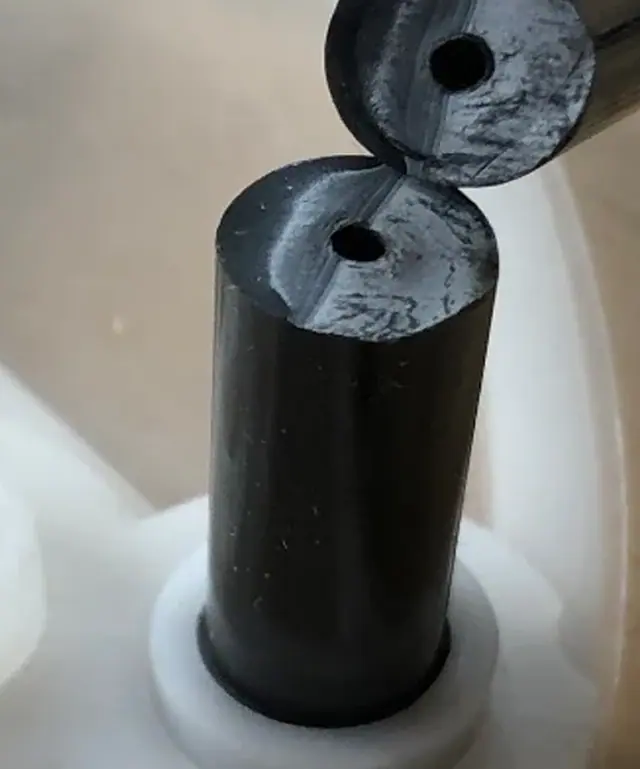
Achieving high-quality injection moulded parts goes beyond fixing a symptom. Root cause analysis gets to what is actually driving the defect, rather than the setting that happens to mask it. When the underlying cause is properly identified the fix holds, across quality, production speed and profitability, instead of drifting back within a few weeks.
Examples of what we get called in for
- Part warpage. Dimensions that will not hold, or a part that will not sit flat or assemble.
- Parts failing in service. Working when they leave the factory, cracking in the field.
- Cycle times that will not hit target or budget. The job runs, but the numbers do not.
- Poor filling characteristics. An air trap, a bad weld line or void, poor surface aesthetics, defects that turned up unexpectedly and cannot be eliminated.
- Process consistency. A process that works today, drifts next month and needs constant minor changes just to keep producing an acceptable part.
If your problem is not on that list it is still worth asking. This is exactly the kind of job where an outside opinion earns its keep.
How we approach it
By scientific method: finding out what the process is actually doing before changing anything. Changing a parameter until a defect disappears means chasing a solution without knowing what caused the problem in the first place, and that is usually why it comes back.
Processing around a problem that is actually rooted in part or tool design is a fruitless exercise. It leads to instability and constant changes rather than a fix. We start with data, establishing what the process is actually doing and using Moldflow where needed to give an inside view of what is happening in the cavity. From there we determine whether the issue is process, part design or tool, define the real process window, set the process inside it and recommend the corrective action needed.
Key considerations
- Material selection and performance. The material chosen significantly affects both quality and durability. Polymer properties, shrinkage, cooling rates, strength. Environmental resistance to heat, chemicals or moisture. Special additives such as UV stabilisers, reinforcements or colourants.
- CAD and CAE studies. Simulation before and during root cause analysis, so changes are made on evidence rather than opinion.
- Mould tool construction and design. Gate position, cooling circuit and venting decide much of what the process can achieve.
- Documentation and quality assurance. A documented process, developed by method, that survives a machine change and a shift change.
Why the fix is often process, not steel
A tool modification is expensive and irreversible, so it tends to be the last thing anyone tries, which means the process has usually been covering for something for a long time.
We will tell you honestly which it is. Sometimes the tool does need work, and knowing that with evidence behind it is worth more than another round of trial and error.
On somebody else's tool
Most of this work is on tools we had no input to and are not moulding. There is no obligation to move the job. If the outcome is that your current moulder now has a documented process that works, that is a successful job.